

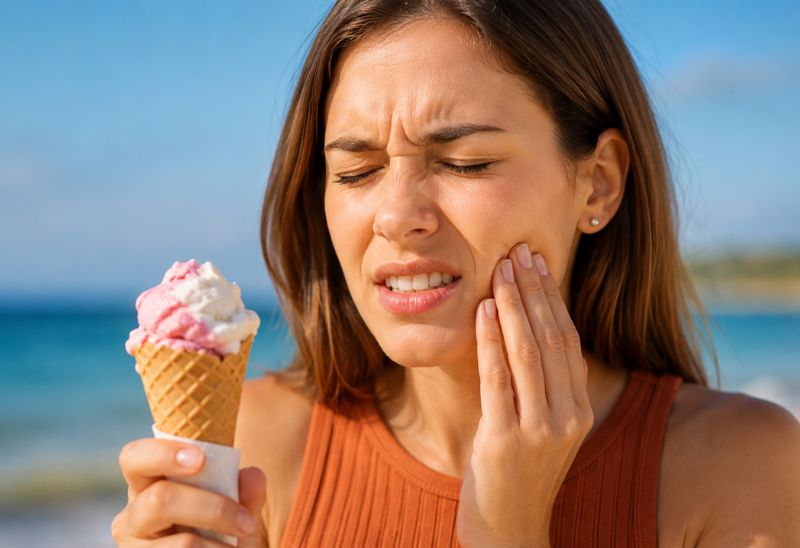
In summer, it's common for many people to notice more toothache When you drink cold beverages, eat ice cream, slushies, or very fresh foods. That feeling of brief puncture, Intense and localized pain may seem like a one-off thing, but when it happens repeatedly it's worth paying attention to.
The Tooth sensitivity In summer it appears when the tooth reacts excessively to certain stimuli, especially the cold. Although in some cases it may be due to a passing sensitivity, it can also be related to enamel wear, gum recession, caries, dental cracks or problems that require professional assessment.
In Asistencia Dental Plus, Dental clinic in Valencia, We recommend not normalizing these discomforts. If they recur frequently, identifying the cause is essential to treating the problem correctly and preventing it from worsening.
Content
Why cold weather can cause tooth sensitivity
The teeth are protected by enamel, an outer layer that acts as barrier to stimuli thermal, chemical and mechanical. When that protection weakens or when the gum recedes and leaves the tooth root more exposed, the cold can more easily reach sensitive internal areas.
That's why, when drinking a very cold beverage or eating ice cream, some people notice a sharp discomfort that appears quickly and disappears when the stimulus is removed.
This reaction does not always mean there is a serious problem, but it does indicate that something is making the tooth more vulnerable than usual.
Why it might get worse in summer
During the warmer months we change many habits. We take More cold drinks, ice cream, soft drinks, Granitas or acidic foods, such as citrus fruits or carbonated drinks. All of these can increase the sensation of sensitivity in people who already had a more exposed dental area or weakened enamel.
In addition, some typical summer drinks can combine cold, sugar, and acidity, three factors that can contribute to tooth irritation or increase the risk of wear y caries if they are consumed frequently.
The problem is not in consuming something cold occasionally, but in the sensitivity recurring, increasing, or persisting for several days.
Common causes of tooth sensitivity
Tooth sensitivity can have different origins. Some of the most common causes are:
- Wear of the tooth enamel.
- Gum recession.
- Brushing too hard or with very hard brushes.
- Early-stage tooth decay.
- Cracks or small dental fractures.
- Leaking or deteriorated fillings.
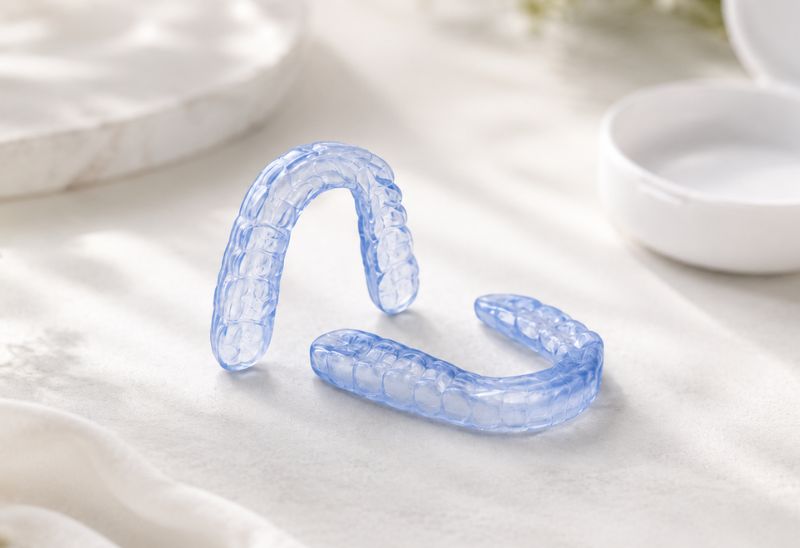
- Bruxism or teeth clenching.
- Frequent consumption of acidic or carbonated drinks.
- Recent dental treatments, such as cleanings or whitening.
That's why it's important not just focus on the symptom. Two patients may notice a similar sensitivity, but require completely different treatments depending on the cause.
When is it appropriate to check sensitivity in a clinical setting?
A temporary sensitivity after consuming something very cold may be harmless if it disappears quickly and doesn't recur. However, it's advisable to consult a doctor. when the discomfort occurs frequently, is located always on the same tooth o It increases as the days go by.
It is also advisable to seek medical attention if the sensitivity is accompanied by pain when chewing, spontaneous discomforts, bleeding gums, inflammation, bad taste in mouth or a feeling that a tooth is weaker.
Tooth sensitivity should not be assumed to be normal, especially if it limits what you eat or drink.
A professional assessment allows us to check for cavities, wear, gingival recession, fissures, gum problems, or any other alteration that may be causing the discomfort.
What can happen if it is ignored?
When the sensitivity If it's due to a minor cause, the treatment can be simple and conservative. But if left untreated, the underlying problem can worsen.
An initial cavity can progress. Receding gums can leave more root surface exposed. Grimace (teeth grinding) can increase wear. A fissure can cause pain when chewing or more serious complications.
That's why early detection is important. It's not just about relieving discomfort, but about protecting the long-term health of the tooth.
How we address tooth sensitivity in the office
Treatment always depends on the diagnosis.. In some cases, hygiene guidelines may be sufficient., desensitizing products, changes in brushing or recommendations to reduce the impact of acidic foods and drinks.
In other cases it may be necessary treat a cavity, check a filling, protect exposed areas, assess the condition of the gums or study whether bruxism is present.
Our goal is to identify the real cause of the sensitivity and apply the most appropriate treatment. for each patient, avoiding generic solutions that do not address the root of the problem.
Take care of your sensitive teeth this summer
If you experience discomfort this summer when consuming cold drinks, ice cream, or fresh foods, don't wait for the problem to worsen. A professional checkup can help you determine what's happening and how to treat it safely.
Furthermore, we work under rigorous clinical protocols and have the Certificate of Dental Excellence DentalQuality, a recognition that validates our commitment to quality, prevention and personalized care.
You can contact us at the 963 16 26 56 or request your appointment through our contact. We would be delighted to assist you in taking care of your oral health with peace of mind and confidence.